

Threads of Transformation
About the Exhibition
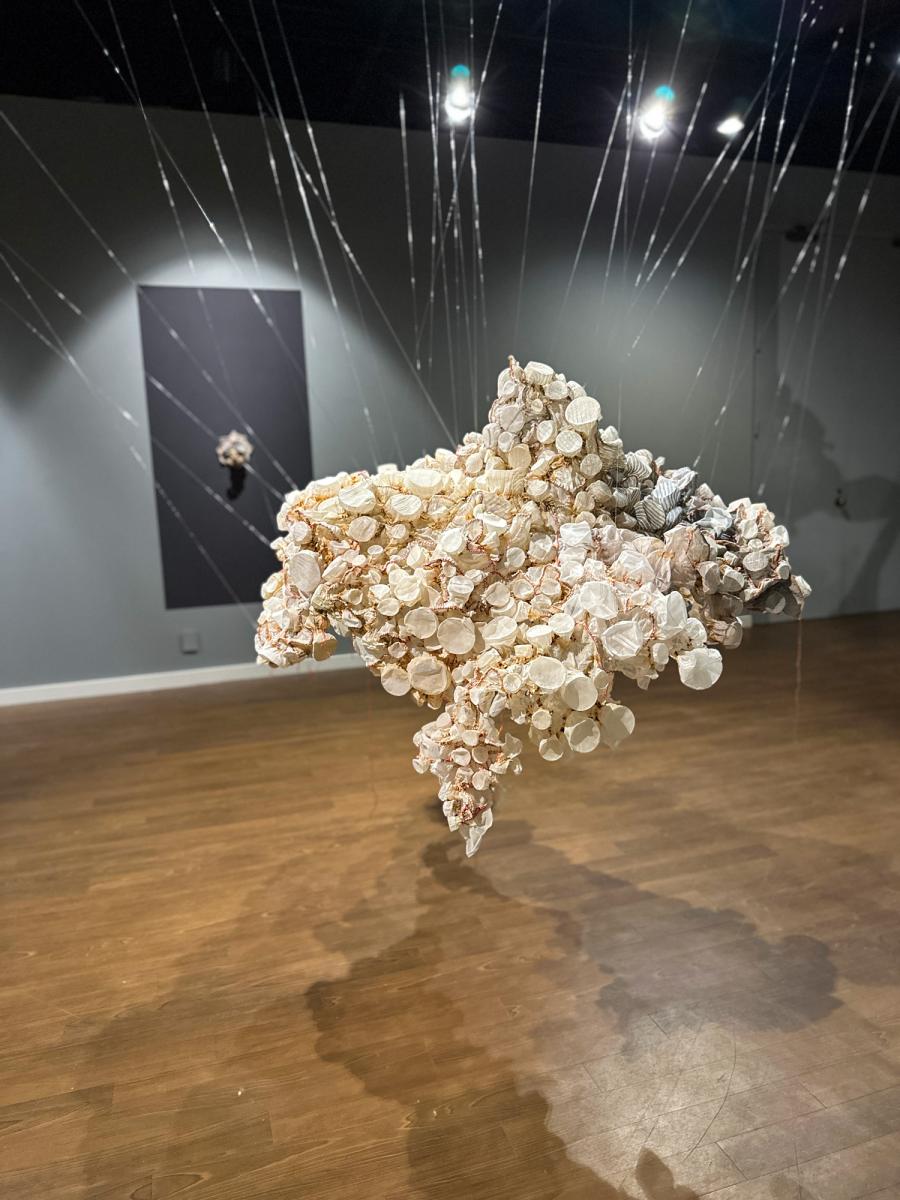
Threads of Transformation, an exhibition that invites guests into the immersive and tactile world of fiber artist Debbie Carlson. Known for her multi-media installations, Carlson transforms humble materials into intricate, sculptural forms that explore the beauty of imperfection, the passage of time through repetitive labor, and the remnants of the artist's hand. Carlson finds her hands continuously knotting, shaping, and tying her fiber works. Shibori, a traditional Japanese textile dyeing technique that involves gathering, stitching, or binding fabric to create resist patterns, holds many possibilities for the artist. She pushes fabric and objects beyond their original purpose, creating new forms that speak to resilience, memory, and transformation. Her work also embodies the Wabi-Sabi aesthetic, celebrating the beauty of imperfection and the quiet poetry of handmade objects. Exhibition Dates: Open June 5 - December 5, 2025
View A Quiet Companion Poetry Book
About Artist Debbie Carlson

Carlson constructs her pieces using fabrics, found objects, stitch work and binding materials. Her process is a derivative of traditional Japanese shibori. Shibori is a fabric dying process originating in Ancient China and later adopted and further developed in Japan. In shibori, the artist binds, folds and twists fabric in a variety of ways before placing it in dye. There are many different ways to create shibori, with techniques grouped into categories, each resulting in different effects and outcomes. Carlson discovered that using multiple shibori binding techniques gave her fabrics strength, shape and structure that could then be developed into sculptural wall hangings and installations.
The binding techniques require a great deal of time and patience from the Artist; and therefore, opens the door to extended periods of reflection and meditation. While working, and constructing her pieces, Carlson often thinks about her family, memories, and the past, present, and future.
Together, these thoughts inform the content of the work, along with their titles. Ultimately, family is most important for Carlson; and as a non- traditional student, family came first, as she studied art and pursued her career later.